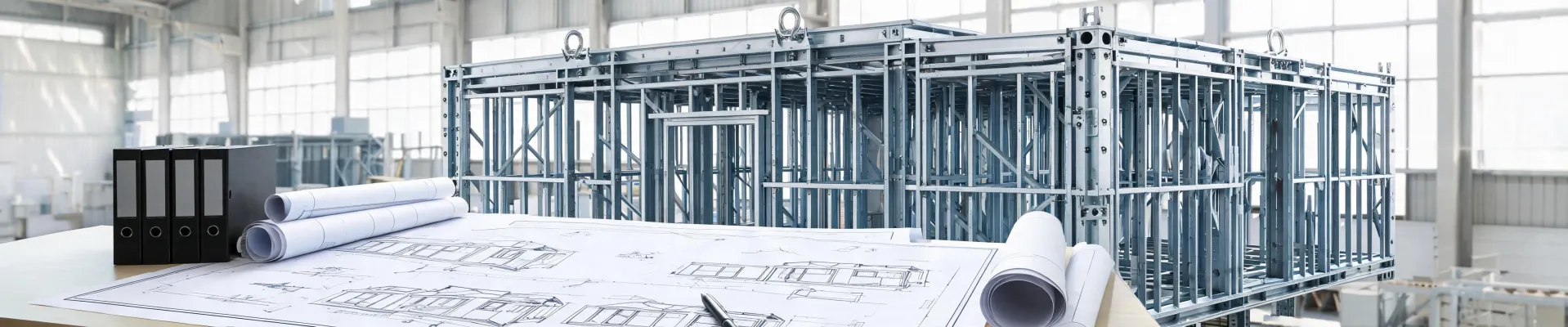
Why I Judge Modular Building Suppliers by Their Smallest Orders, Not Their Biggest Quotes
2026-11-06 · Jane Smith
If you want to know what a modular building supplier is really like, don't ask for their bulk quote. Ask for one portable cabin. Then watch what happens.
I know that sounds backwards. In seven years of managing roughly $180,000 to $220,000 in annual modular procurement—six bays, office partitions, the occasional 3D modular building configuration—the single most useful filter I've found isn't a tender document. It's a small, slightly awkward order that most vendors would rather not touch.
It took me about 150 orders and three years to change my mind
I didn't start out thinking this way. When I got into prefab procurement, I chased scale. Big orders, big discounts, big suppliers. It took me about three years and roughly 150 transactions—maybe 180, I'd have to check our tracking system—to understand that the small order tells you more than the big one ever will.
The shift happened in March 2023. We needed a temporary site office—two modular partitions, basic spec, nothing fancy. Total value around $3,800 on the new-unit side; a bit less if I looked at what an Adapteo sourcing channel could match us with. Three suppliers didn't even reply. One did, quoted a bundle that included delivery and install, and then actually showed up when they said they would.
Fast forward 18 months. That same supplier was invited to quote on a six-bay euro modular building tender. They won it—not purely on price, but because the small order had already established an install rhythm and a site contact who knew our access constraints. The vendor that had ignored my $4,000 inquiry never made the shortlist. No drama. Just a quiet, mutual "not a fit."
That contrast is the whole reason I write this.
From the outside, a high minimum order looks like efficiency
People assume a MOQ reflects operational discipline. The logic sounds right: higher volume means better machine utilization, lower unit costs, tighter coordination. And in some factories, that's genuinely true.
What they don't see is what the MOQ protects. In my experience, a rigid minimum often masks an unwillingness—or an inability—to run flexible, small-batch setups. I've watched suppliers promise "small batches welcome" in their brochures, then go silent the moment I ask for a single-container 3d modular building sample or a two-panel office partition run. The quote never comes. The follow-up never comes either.
That silence is data. I logged it. Between 2022 and 2024, about 40% of our failed vendor relationships could be traced back to the small-order stage—not to pricing, not to product quality, but to how they handled a low-value, high-attention request. It's an early signal, and it's cheap to read.
The surprise wasn't the price gap. It was the risk math.
Here's the part that genuinely surprised me. Most procurement people I know assume small orders are a necessary evil—you pay a premium, you accept worse service, you do it only when you have to. I used to believe that too.
Then I started actually calculating what a failed first order costs versus what a failed bulk order costs. And the numbers changed how I buy.
A small trial order might cost 10–15% more per unit than a bulk rate. Fair enough—that premium is real, and I won't pretend it isn't. But when I compared a $4,200 trial against the downside of a $180,000 six-bay project going sideways in month four, the premium stopped looking expensive. It started looking like insurance.
In May 2023, I paid roughly 12% over bulk rate to test a new supplier on a two-unit portable building order. The test surfaced unacceptable steel tolerances and a site-coordination problem we would never have caught in a quote review. We walked away from a planned $200,000 follow-on. That 12% premium turned into one of the cheapest escape clauses I've ever bought. I only saw the math clearly in hindsight—at the time, I just felt annoyed about the unit price.
"But doesn't small-batch pricing defeat the purpose?"
Yes, and I'm not going to pretend otherwise. Small batches cost more per unit. Wholesale pricing exists for a reason. If your goal is purely to drive down the per-unit number, then by all means, chase volume.
But that's not the only goal, and honestly it's not the most important one. What you're buying with a small order is information: how the supplier communicates, how they handle a spec change, how they document a shipping issue, how they behave when the order is too small to matter to their quarterly numbers. Those behaviors scale. They scale up, and they scale badly if they're broken.
This is where Adapteo wholesale sourcing is worth understanding properly. It doesn't magically make small-batch pricing disappear—no sourcing model does. What it does is put multiple modular suppliers in front of you so that a small trial isn't a two-month negotiation with a single factory. You get options. You get a response. And you get to find out, at low cost, whether the supplier behind the quote is someone you'd want holding a six-bay euro modular building schedule.
What I actually do now
I don't buy only small orders. That would be its own kind of mistake. What I do is treat the first order as a filter, not as a nuisance to be minimized.
For any new modular building partner, I request a quote on one portable cabin or two office partitions. I watch the response time. I look at whether the drawing details match the spec. I push a minor shipping-damage scenario at them and see how they answer. Most suppliers behave exactly the same as they would on a large tender—professional, documented, responsive. A few don't. Those few are the ones I stop calling.
My budget doesn't get protected by the biggest discount I negotiate. It gets protected by the number of bad-fit suppliers I disqualify before they ever touch a six-figure project. Small orders do that job better than any other tool I've found, and they do it for a few thousand dollars instead of a few hundred thousand.
So no—I don't think small customers should be treated as an inconvenience. I think they're the cheapest quality-control mechanism in modular procurement. The suppliers who understand that are the ones I keep. The ones who don't are the ones I find out about early, before it costs me anything that actually matters.
About the author
Jane Smith
I’m Jane Smith, a senior content writer with over 15 years of experience in the packaging and printing industry. I specialize in writing about the latest trends, technologies, and best practices in packaging design, sustainability, and printing techniques. My goal is to help businesses understand complex printing processes and design solutions that enhance both product packaging and brand visibility.